


Umitec ZoneCraft LED Mask Series 3: Is smarter light distribution the future of LED skincare?

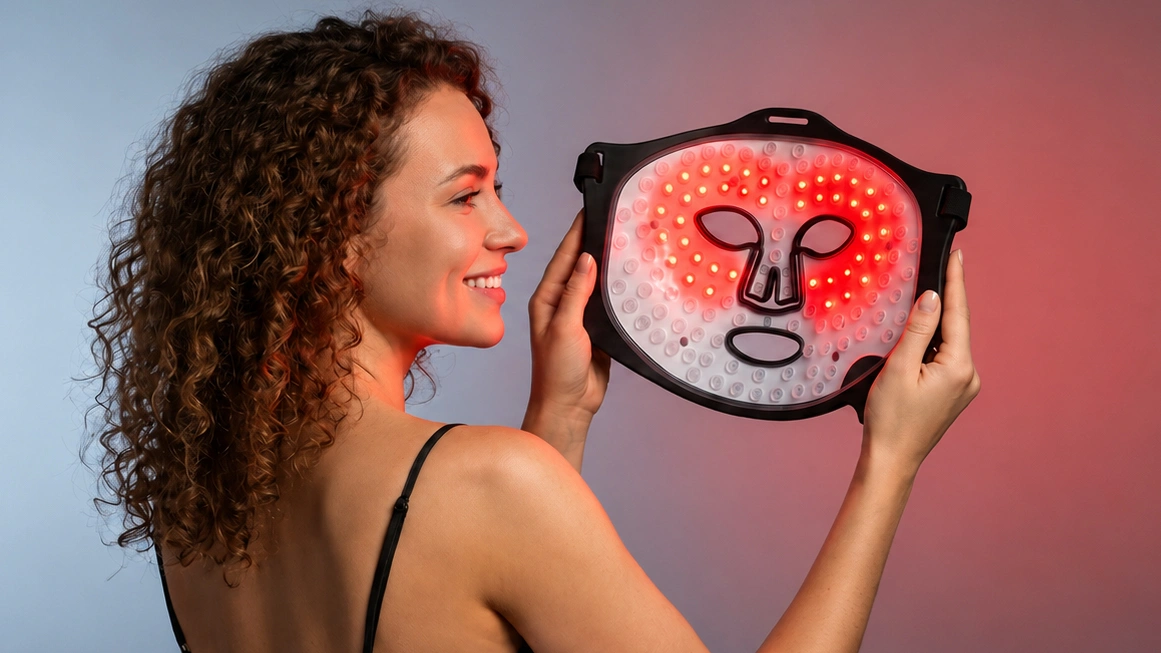 Image credit:
Umitec
Umitec’s ZoneCraft LED Mask Series 3 wants to shift the conversation from how many LEDs a mask has to how evenly the light actually reaches your skin
In this article
Umitec has launched the ZoneCraft LED Mask Series 3, designed around more even light distribution.
The mask uses a diffusion structure to reduce hotspots and weaker coverage areas across the face.
It has four light modes – red and infrared, blue, yellow, and composite – and lets you choose zone treatments across different areas of the face.
The flexible silicone aims to fit more comfortably and a 4,000 mAh battery supports 8-9 uses per charge.
LED face masks have become a proper fixture in the at-home beauty tech conversation.
Dermatologists talk about them, skincare communities debate them, and they’ve made it onto plenty of bathroom shelves.
The selling point has mostly been about more – more LEDs, stronger output, more light modes.
But doesn’t it also matter how evenly that light actually hits your face?
That’s the angle Umitec is coming at with its ZoneCraft LED Mask Series 3.
Rather than leading with LED count, the brand is focusing on distribution – how consistently the light reaches different parts of your face during a session.
Below, we explain what that means in practice, what the mask actually does and whether it’s a meaningful step forward.
Why coverage matters in LED light therapy
If you’ve been looking at LED face masks, you’ve probably seen brands leading with LED count as the main measure of quality. More LEDs, the logic goes, means a better treatment. But the number of LEDs only tells part of the story.
In LED light therapy, how evenly the light is distributed matters alongside how many LEDs are present. If the spacing between LEDs is uneven, certain parts of the face – the sides of the nose, the jawline, under-eye areas – may receive noticeably less light than others.
You can end up with concentrated exposure in some zones and weaker coverage in others, which isn’t ideal when the whole point is a consistent treatment across your face. This isn’t a new problem, but it’s one the industry hasn’t always addressed.
Rigid masks in particular can struggle to sit evenly against the varied curves of a real face. Most of us don’t have entirely flat cheekbones or a perfectly flush jawline, which is where the fit starts to matter as much as the technology inside.

What is Umitec’s ZoneCraft technology?
 Image credit: Umitec
Umitec’s ZoneCraft system is designed to address the distribution problem directly. The mask uses a dense LED layout combined with a light-guiding and diffusion structure, which is intended to reduce the hotspots and weaker zones that can result from less even LED placement.
The diffusion layer works by spreading the light more consistently across the mask’s surface, rather than allowing each LED to beam at full intensity into one concentrated spot. Think of it less like individual spotlights and more like an overhead panel – broader, more consistent coverage rather than scattered pools of light.
Umitec says this approach improves coverage particularly in harder-to-reach areas: the sides of the nose, the jawline, and the under-eye zone. These are exactly the areas where rigid masks tend to fall short, so the claim is relevant if accurate.
Worth noting: these are Umitec’s own design claims rather than results from independent clinical testing. That doesn’t automatically make them wrong, but it’s worth bearing in mind when weighing them up against competing masks that have published third-party data.
Fit and comfort
 Image credit: Umitec
The ZoneCraft mask uses flexible silicone rather than a rigid shell. This is increasingly common in the LED mask category – brands have moved away from the hard, almost sci-fi-looking designs of earlier devices towards softer, more form-fitting options.
The flexible build is supposed to help the mask adapt to facial contours, particularly around the nose, jawline, and under-eye area. If the mask is sitting flush against your skin rather than hovering above it, the light has less distance to travel and less room to scatter before it reaches you – which matters for how effective the treatment actually is.
Comfort during longer sessions is also a factor. A rigid mask that digs in around the nose or doesn’t sit properly on the jaw is one you’re going to take off early or avoid using consistently. A flexible design should make it easier to actually stick to a routine, which is ultimately how LED therapy delivers results.
Light modes and zoned treatment
 Image credit: Umitec
The ZoneCraft mask includes four light therapy modes:
- Red and infrared light – typically used for anti-ageing, collagen support, and improving skin texture
- Blue light – primarily aimed at blemish-prone or acne-prone skin
- Yellow light – often associated with redness reduction and an improvement in overall skin tone
- Composite mode – a combination of wavelengths for a more general treatment
The more distinctive feature is the zoned treatment approach.
Rather than treating your entire face with the same light at the same intensity, the mask allows you to treat different areas separately – forehead, T-zone, cheeks, chin, and under-eye – depending on your skin’s needs. If your forehead is prone to breakouts but your cheeks are dry and dull, you’re not stuck using the same mode across your whole face.
This is a genuinely useful idea, particularly for anyone with combination or uneven skin.
Whether the on-mask controls are intuitive enough to make it easy to use in practice is something we’d want to test properly before drawing conclusions but as a concept, it’s more thoughtful than a single blanket mode.
♥ Don’t miss out! Sign up for the mamabella newsletter today ♥
MORE LIKE THIS
- Best LED face mask UK
- Dreame Chrona LED mask: light therapy modes and price
- Shark CryoGlow LED face mask: does it work?
- CurrentBody LED face mask review
- Cellreturn Platinum LED mask review
- Facial massage tools and gadgets for anti-ageing
Latest Articles


