


The truth about wearing sunscreen in winter

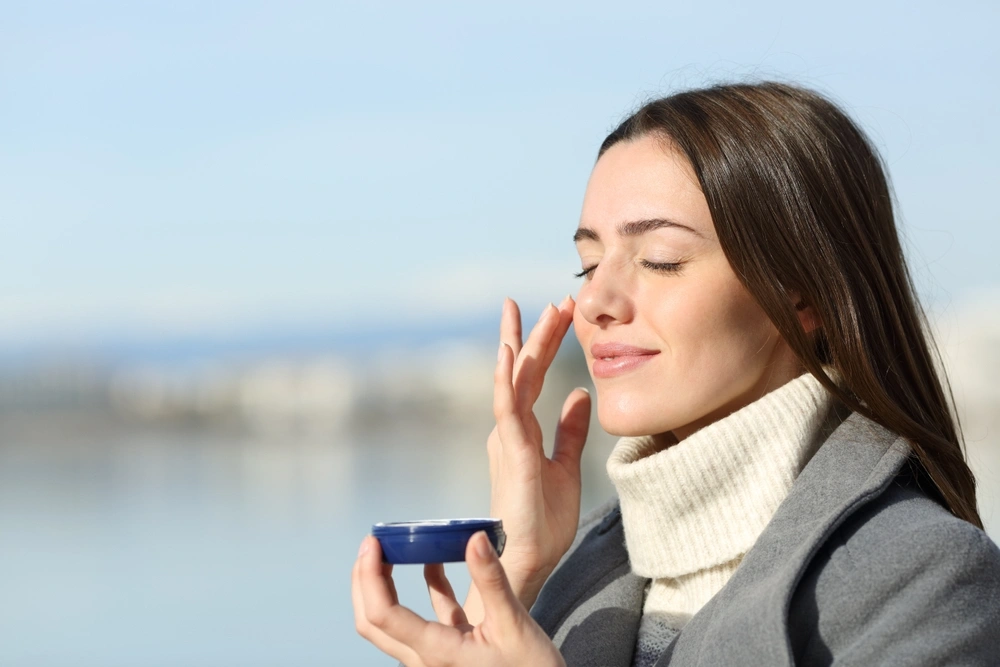 Image credit:
Shutterstock
Whether you’re walking to work, skiing, or just sitting by a window, daily sunscreen in winter is non-negotiable
The clocks have gone back. The nights are drawing in but one thing from summer remains – our daily use of SPF.
In winter, people put their sunscreen out-of-sight without a second thought. It’s true sunshine feels weaker in colder months, or there’s just less of it. As a result, many of us think sunscreen is unnecessary…when it couldn’t be further from the truth.
Only because you’re wrapped up, doesn’t mean the sun is taking a break from bombarding you with its UV rays. Also, daily sunscreen users show a 24% improvement in skin ageing compared to those who apply it occasionally.
Beyond beauty, continuous sun protection also greatly reduces the risk of skin cancer of course.
In this article we explain more about the winter sun myth, how to approach applying SPF in winter months and how to protect yourself.
FURTHER READING: What is SPF and why is it so important?
The winter sun myth
UVA rays – the rays responsible for premature ageing and skin damage – stay constant all year round. They penetrate through clouds, fog, and even windows. So while it is not warm on the skin, damage-causing rays are silently getting absorbed over time. Here are winter sun facts that may surprise you.
- Snow reflects up to 80% of UV rays, essentially doubling exposure
- UV radiation increases by 10-12% for each 1000 feet of elevation
- On cloudy days, clouds block only 20% of UV rays
- Longer exposure durations are spent outdoors during winter sports
- Cold temperatures mask the sun’s effect, giving us false security
Best sunscreen recommendations


Choosing the right sunscreen cream for winter, then, is similar to choosing an SPF in summer. Ideally, you should opt for the highest factor possible but universal rule is a minimum SPF 30 for daily wear.
A broad-spectrum SPF 30 provides excellent protection for most winter activities, like general commuting or running errands. However, if you’re heading down the slopes, hiking in snowy conditions, or outdoors for prolonged periods, consider scaling up to SPF 50 or higher for winter.
FURTHER READING: Best sunscreen for face UK: Which face sunscreen is best for your skin type and budget?
How winter weather can increase sun damage

In winter, the snow acts as a mirror and bounces UV rays back onto the skin from more than one angle, thus creating conditions that actually enhance, rather than reduce sun exposure. This means your face is essentially being attacked twice. Once by direct sunlight and another by reflection from the ground.
Those who enjoy winter sports are faced with extra high risks. Skiers, snowboarders, and winter hikers often spend hours in high-altitude climates, where UV radiation is much stronger. This higher mountain air offers less atmospheric protection, too.
But the city has its own challenges. In urban settings, buildings made of glass and icy surfaces create reflective corridors that reflect UV rays in unexpected ways. Even on your short walk to work, you may be getting much higher doses of radiation than you might think.
Best practices: Winter Sunscreen application
 Image credit: mamabella
It is one thing to know that you should wear sunscreen in winter, but another thing entirely to wear it right. Most end up applying less or forgetting to reapply, making sun protection virtually futile.
Helpful tips for wearing sunscreen in the winter season:
1. Start with Clean Skin: Apply sunscreen on freshly cleansed, moisturised skin. Let the moisturiser absorb for a couple of minutes before applying sunscreen.
2. Use Enough Product: Most people use only 25-50% of the required amount. For the face, you will need the equivalent of a ten pence-sized dollop; for the overall body, it would be a shot glass full.
3. Don’t skip areas: Ears, neck, backs of hands, and lip. These areas age extremely fast due to inadequate exposure.
4. Renew Application Regularly: Even in winter, every two hours reapplication during outdoor leisure activities is crucial.
5. Layer Appropriately: Sunscreen goes after moisturiser and before makeup. Wait for about 15 minutes before going outside.
What about mature skin?
Our skin becomes thinner with age and more susceptible to sun damage. Years of accumulated exposure to UV can manifest as age spots, wrinkles, or other serious health conditions if protection is not adhered to year-round. Premier PMI also offers medical insurance for retirees, which is especially good if you play golf in warmer locations, morning walks, or even gardening.
Speaking of health cover, children’s skin is more vulnerable to damage, and studies show childhood sunburns has been linked with increased risk for skin cancer in later life too so PMI’s private health care for child UK is also worth considering.
♥︎ Don’t miss out! Sign up for the mamabella newsletter today ♥︎
MORE LIKE THIS
- Best moisturisers for oily, dry and mature skin
- Winter rash: How to stop the winter itch striking your hands and face in cold weather
- Best sunscreen for face UK: Which face sunscreen is best for your skin type and budget?
- Best cheap makeup alternatives to Charlotte Tilbury, NARS, Huda Beauty and more
- The best cheap skincare alternatives to La Mer, Estée Lauder and more
- Best SPF powder: Protect your skin while getting flawless makeup
- Best tinted moisturisers
- What is SPF and why is it so important?
- The truth about the acids in your skincare
- Best eye cream
- The science of moisturiser
- What does non-comedogenic mean?
- What is hyaluronic acid and what does it do to your skin?
- Best anti-ageing cream
- How to get rid of dark circles
- What does toner actually do?
- Perfect your skincare routine with these must-have facial products
Latest Articles


